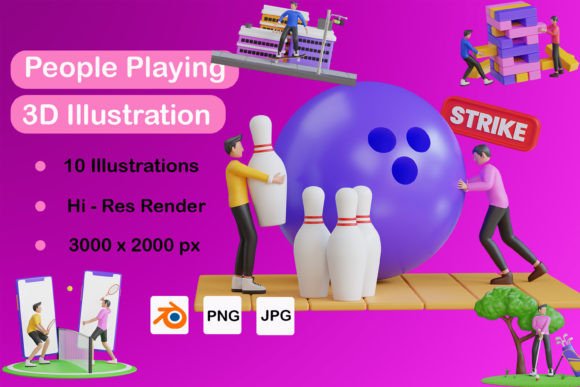
Bring Your Projects to Life with the 3D People Playing Pack
When you're working on a project that needs to feel alive, energetic, and genuinely human, static imagery often falls short. You need characters that feel like they're in motion, interacting with their environment, and conveying a specific emotion. That’s precisely where the 3D People Playing Pack comes in. This isn't just a set of random 3D models; it's a curated collection of dynamic, stylized human figures captured in various playful and active poses. The visual style is modern and clean, with a slight softness to the rendering that makes these assets feel approachable and versatile. They aren't hyper-realistic, which is a strength—they can seamlessly fit into a wide range of projects without clashing with your existing brand's aesthetic. The characters have a friendly, relatable personality, making them perfect for scenarios where you want to build a connection with your audience.
The Anatomy of a Versatile Design Asset
What makes this particular pack so useful is the thoughtful combination of file formats and the sheer variety it offers. You receive 10 JPG files for quick, background-inclusive use, 10 PNG files with transparent backgrounds for easy layering in any design software, and—perhaps most valuably—10 BLENDER files. The inclusion of the native Blender files is a game-changer. It means you aren't just stuck with pre-rendered images. If you have basic 3D skills, you can adjust the camera angle, change the lighting to match your scene, or even tweak the pose slightly to get the exact composition you need. This level of control transforms the pack from a simple illustration set into a powerful design asset for serious creators.
The characters themselves are depicted in a variety of activities—jumping, high-fiving, running, and celebrating. This diversity allows you to tell a cohesive visual story. For instance, you could use a sequence of these figures across a website to guide a user's journey, or create a vibrant social media graphics series that maintains a consistent brand identity. The style is a contemporary take on 3D illustration, avoiding the cold, technical feel of some 3D renders in favor of something more artistic and engaging.
Where This 3D Pack Truly Shines
The applications for the 3D People Playing Pack are extensive, limited mainly by your imagination. In web design, these figures can serve as engaging hero images, interactive elements in a user interface, or friendly guides for an onboarding process. They add a layer of depth and personality that flat icons or stock photos simply can't match. For UI & UX designers, incorporating these playful characters into empty states, success screens, or tutorial steps can make the digital experience feel more human and less intimidating.
For marketers and entrepreneurs, the pack is a goldmine for creating compelling promotions. Imagine a banner for a fitness app featuring the jumping characters, or a social media ad for a team-building workshop using the high-fiving figures. The dynamic poses naturally draw the eye and communicate action and enthusiasm. In editorial design and blogging, these illustrations can break up long blocks of text, visualize abstract concepts like "collaboration" or "achievement," and make content more shareable.
Beyond digital spaces, the pack has strong potential in print. Use the figures in packaging design for products aimed at families, games, or sports. They can be incorporated into poster designs for community events, youth programs, or local sports leagues. Even for personal projects—like designing a custom birthday invitation, a family newsletter, or a scrapbook page—these assets provide a professional and fun touch that elevates the final product.
Making the Pack Work for Your Brand
Integrating any new visual element into your work requires a bit of strategy to ensure it strengthens rather than dilutes your message. The key is to treat the 3D People Playing Pack as a component of your broader brand identity. First, consider the color palette. While the characters come with their own shading and highlights, you can often adjust their hues in post-processing or within Blender to better align with your brand's primary and secondary colors. This small step goes a long way in creating visual consistency.
Next, think about context and storytelling. Don't just drop a character in because it looks cool. Ask yourself what action it's performing and how that action relates to the headline or call-to-action nearby. A figure reaching upward can symbolize growth or aspiration, perfect for a business coaching site. A group of figures huddled together can represent community, ideal for a social platform or a membership site. This intentional use of imagery strengthens your narrative and improves audience engagement.
When it comes to font pairing and typography, the playful, modern nature of these 3D illustrations pairs well with clean, contemporary typefaces. A bold sans serif font for headlines can complement the figures' strong shapes, while a friendly handwritten font or a simple serif font for body copy can maintain readability without competing for attention. The goal is to create a harmonious visual hierarchy where the text and the 3D elements support each other, guiding the viewer's eye smoothly through the design.
A Practical Checklist for Using the Pack
Before you dive in, here are a few practical considerations to ensure you get the most out of your investment. This is about moving from having a great asset to using it effectively.
- Evaluate the Fit: Does the stylized, friendly aesthetic of the 3D figures match the tone of your project? They work exceptionally well for brands that are approachable, energetic, modern, or community-focused. For ultra-luxury or very formal corporate communications, you might need to use them more sparingly or as subtle accents.
- Leverage the Blender Files: If you have access to Blender—even a basic understanding—open the files. Experiment with the camera angle and lighting. You might discover a perspective that is uniquely suited to your layout and is not available in the pre-rendered JPG or PNG versions.
- Test for Readability: When placing these figures behind or alongside text, always check for legibility. Use the PNG files with transparent backgrounds to layer them carefully. You may need to add a subtle drop shadow, a semi-transparent overlay, or adjust the figure's position to ensure your message remains crystal clear.
- Consider Commercial Use: This is critical. The pack is listed as a design asset, which typically implies a license for use in both personal and commercial projects. However, always double-check the specific license agreement that comes with your download. Understanding the terms—like whether you can use it in unlimited projects or if there are restrictions on print run numbers—protects you and your business down the line.
- Create Cohesive Sets: Use multiple characters from the pack together to create a sense of a scene or a team. This is far more powerful than using a single, isolated figure. A consistent cast of characters across your website, social media, and print materials builds recognition and makes your brand feel more established and thought-out.
Ultimately, the 3D People Playing Pack is more than just a collection of files. It's a toolkit for injecting motion, emotion, and human connection into your creative work. By thoughtfully applying these assets, you can transform a static design into a dynamic story, making your projects more engaging, memorable, and effective at communicating your core message. Whether you're building a brand from scratch or refreshing an existing one, this pack offers a flexible and modern visual language to help you connect with your audience.