Microblogging Illustration Concept: A Visual Toolkit for Modern Creators
In a world where attention is the ultimate currency, static text often falls flat. We scroll through endless feeds, our eyes glazing over walls of copy. The challenge for any designer, marketer, or small business owner is to cut through that noise instantly. This is where the right visual asset becomes less of a decoration and more of a strategic necessity. The Microblogging Illustration Concept is a direct response to this modern need, offering a cohesive set of visuals designed for the fast-paced, communication-driven digital landscape. It’s not just a collection of drawings; it’s a visual language built for clarity, engagement, and brand consistency.
Understanding the Core Visual Language
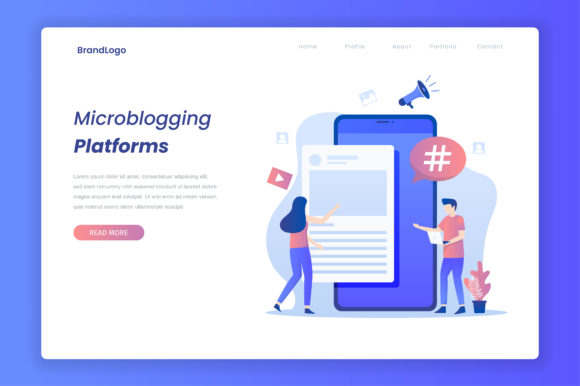
At its heart, the Microblogging Illustration Concept is defined by its clean, contemporary, and approachable style. Think of the visual personality as friendly yet professional, minimal yet expressive. The illustrations typically feature simplified human figures with a focus on action and interaction rather than hyper-realistic detail. This abstraction is a strength, as it allows viewers to project themselves into the scene, making the message more relatable. The color palettes are often vibrant but controlled, utilizing a limited set of hues to maintain cohesion and avoid visual clutter. You’ll notice bold, flat shapes, smooth gradients used sparingly for depth, and a consistent line weight that ties the entire set together. This style sits comfortably at the intersection of modern web design and contemporary editorial illustration, making it incredibly versatile.
The overall appeal lies in its ability to communicate complex ideas—collaboration, data analysis, content creation, community building—through simple, intuitive scenes. It’s a visual shorthand that resonates with an audience fluent in social media and digital interfaces. For a brand, adopting this style signals that it is current, tech-savvy, and user-centric. It moves beyond generic stock imagery to offer something with a distinct point of view, which is crucial for building a recognizable brand identity.
Strategic Applications Across Your Projects
The true value of a design asset like this is measured by its utility. Where exactly does the Microblogging Illustration Concept work best? The answer is almost anywhere you need to tell a story or explain a process visually.
- Digital Presence & Marketing: This is its native environment. Use these illustrations to transform a landing page from a sales pitch into an engaging narrative. They can break up long sections of text, visually explain features of an mobile application, or create eye-catching social media graphics that stop the scroll. For a web design project, they can serve as hero images, onboarding sequence graphics, or blog post featured images that consistently align with your site's aesthetic.
- Branding & Identity: While not a logo design tool in itself, this illustration system can become a cornerstone of your brand identity. It establishes a unique visual tone that can be extended across all touchpoints. A startup could use it to define its friendly, innovative personality. A small business owner could use it to create a cohesive look across their website, email newsletters, and printed materials, ensuring every interaction feels intentional and polished.
- Content Creation & Publishing: For bloggers, publishers, and content creators, these illustrations are a godsend. They provide a consistent visual language for your editorial design. Instead of hunting for disparate stock images for each article, you can use this set to create a recognizable series. It’s perfect for illustrating concepts in business, tech, productivity, or creative niches. Think of customizing them for posters and banners at a local workshop or for a digital course launch.
- Product & Packaging: The applications extend into physical products. A packaging design for a tech gadget or a creative tool could use a simplified version of these illustrations to highlight its use case on the box. A crafter selling digital planners or templates could use these assets to create compelling mockups and promotional materials, elevating their perceived value.
Making the Concept Work for You: Practical Guidance
Acquiring the asset is the first step; integrating it effectively is where the real work begins. Here’s a practical approach to leveraging the Microblogging Illustration Concept.
First, evaluate the fit. Before you dive in, compare the illustration style to your existing brand guidelines. Does its personality—friendly, modern, clean—align with how you want your audience to feel? If your brand voice is highly corporate and traditional, this style might feel dissonant. If it’s approachable, innovative, or educational, it’s likely a perfect match.
Next, consider the technical delivery. The file includes multiple formats for a reason. The AI and EPS files are your workhorses for professional editing. They are vector-based, meaning you can scale them to any size without losing quality—from a tiny mobile application icon to a massive trade show banner—and you can easily edit colors, move elements, or adjust compositions to fit your specific layout. The SVG file is ideal for web design, offering sharp rendering on all screens and smaller file sizes. Use the SVG for website graphics and the PNG files (likely with transparent backgrounds) for quick placements in social media tools, presentations, or documents where advanced editing isn’t needed. The JPEG is useful for previews or contexts where transparency isn’t required.
Testing and Pairing is crucial. Don’t just drop the illustration onto a page. See how it interacts with your chosen typography. Does the illustration’s bold, simple style pair better with a clean sans serif font for a modern look, or could it soften the edges of a sharp serif font for an editorial feel? Use it to establish a visual hierarchy. A key illustration can draw the eye to a primary call-to-action or a critical section of your page. Create mockups of your landing page or social media graphics before finalizing. Does the illustration clarify your message or distract from it?
Finally, think about consistency and licensing. The power of this set is its cohesion. Use illustrations from the same set across a campaign to build a recognizable visual thread. Ensure you understand the commercial license. For most entrepreneurs and marketers, a standard license that covers digital and print use for a single business or project is sufficient. If you’re a designer creating work for multiple clients, you may need an extended license. Always review the terms to avoid legal headaches down the line.
In essence, the Microblogging Illustration Concept is more than just a creative font for pictures. It’s a premium set of design assets